FNA Biopsy: What you need to know
Fine-Needle Aspiration is a minimally invasive biopsy method used to collect tissue from a suspicious lump or mass.
By using a very thin needle, doctors can gather enough tissue for preliminary diagnosis, often faster and with fewer complications when paired with Rapid On-Site Evaluation (ROSE).
FNA Biopsy Procedure
What happens during the procedure?
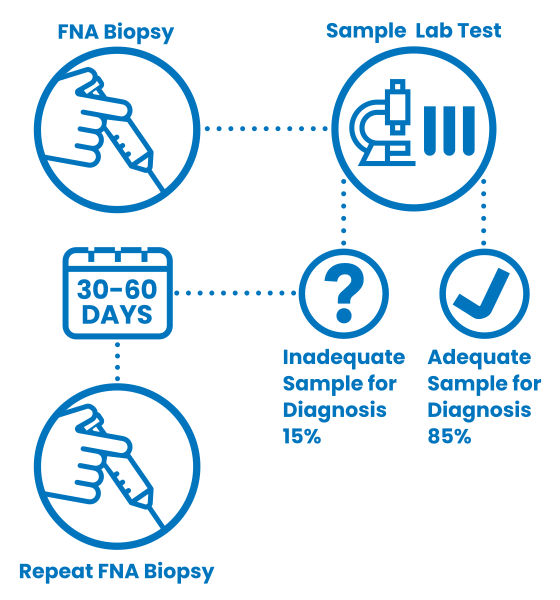
A local or general anesthesia will be applied to reduce discomfort. Often imaging will be used in conjunction to guide the needle to the mass. Once the needle is placed in the mass, the sample is obtained. If the facility uses rapid on-site evaluation, a trained specialist checks the sample immediately to ensure it is adequate. Most patients go home the same day with minimal restrictions.
What happens with my sample?
The sample is sent to the cytology lab, where it is evaluated by trained specialists, and a final diagnosis is made.
What is the difference between a core biopsy and an FNA?
Needle size. Core biopsies use a wider needle to get a larger sample. They are commonly used for breast biopsy or in conjunction with an FNA to get adequate sampling for further testing.
Here are some common scenarios where doctors perform FNA biopsies:
- Thyroid Nodules
- Lymph Nodes
- Breast Lumps
- Lung Masses
- Salivary Gland Masses
- Abdominal Masses
- Metastatic Cancer*
*to assess whether cancer has spread to other parts of the body
Source: my.clevelandclinic.org
are done each year
performed each year
States, approximately
in 2024 – many included
FNA biopsy procedures
Research indicates that ROSE can increase diagnostic accuracy while reducing the likelihood of an “inconclusive” diagnosis across all cancer types.
FNA biopsy with ROSE isn’t about speed; it’s about peace of mind and ensuring the best possible treatment plan.